Every monument rebuilt
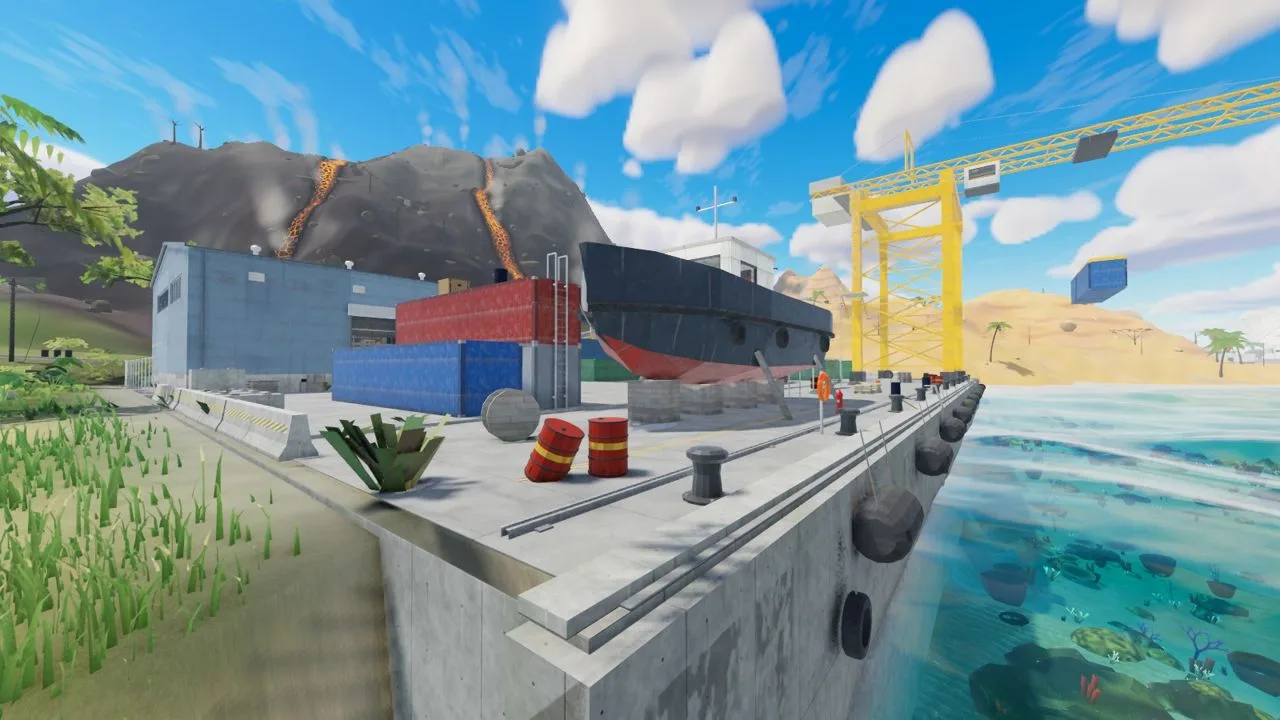
All the monuments you can visit have been rebuilt with real textures and far more detail, from the Gas Station and Lighthouse up to Caldera Works and Skua Roost, including the Oil Rig, the Cargo Ship, the Underwater Lab and the Utility Tunnels.
- Concrete, steel, tiles and paint look like the real thing up close, with wear, stains and grime, and each site wears its own climate in the snow and the desert.
- Buildings are furnished and lit inside: shop shelves and counters, offices, control rooms, workshops and quarters.
- Sites hold their detail further out and fade more cleanly into the distance.
- Layouts are the same: every road end, ladder, crate and patrol is where you know it.
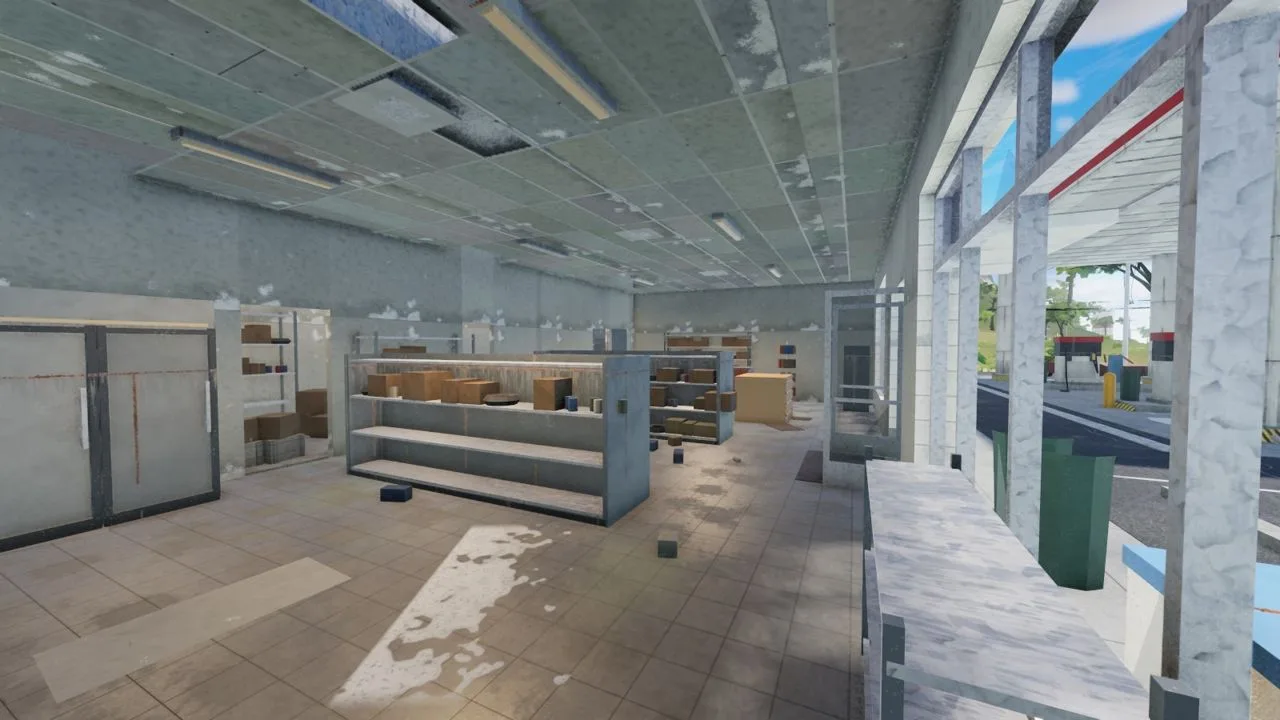
The first time you load in after the update, the game downloads the new monument models, about 20 MB. We packed them about a quarter smaller than they came out of the editor.
Building on hills
Bases, barricades and walls were close to impossible on a hillside. Now:
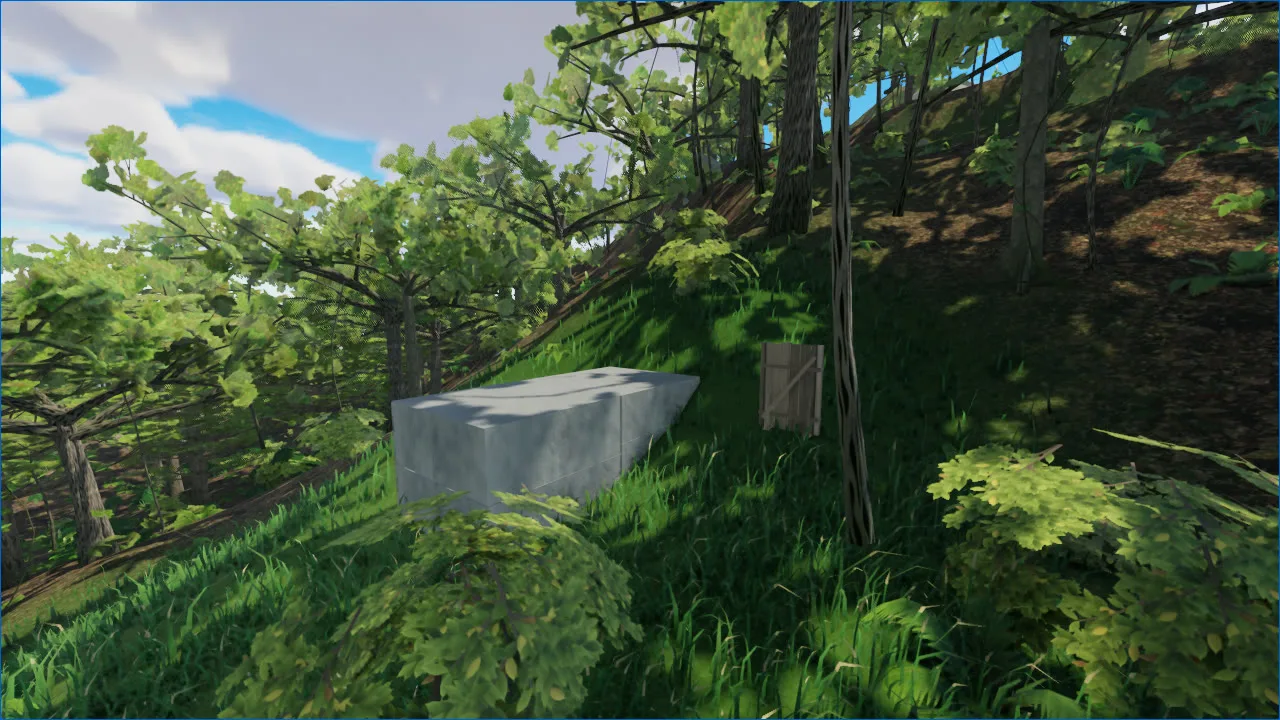
- A foundation reaches down to the ground on its downhill side, up to 3 m, so you can put one on a steep slope and extend it downhill. On flat ground nothing changes.
- Barricades dig their stakes into the uphill side and stand across slopes of about 27°, with no gap underneath to crawl through.
- Boxes, furnaces, workbenches and other placeables can sit a little into a slope instead of needing flat ground.
- High external walls reach 2 m down a slope (up from 1.2 m), and stone walls show proper courses of stone below ground level instead of a smeared bottom row.
The Skua
- The gunship no longer opens fire on survivors just going about their day. It only attacks someone who has attacked another survivor or a scientist in the last 5 minutes, or is hostile at the Outpost, and carries a weapon in their hotbar or wears armor. Shoot at it and it will always shoot back.
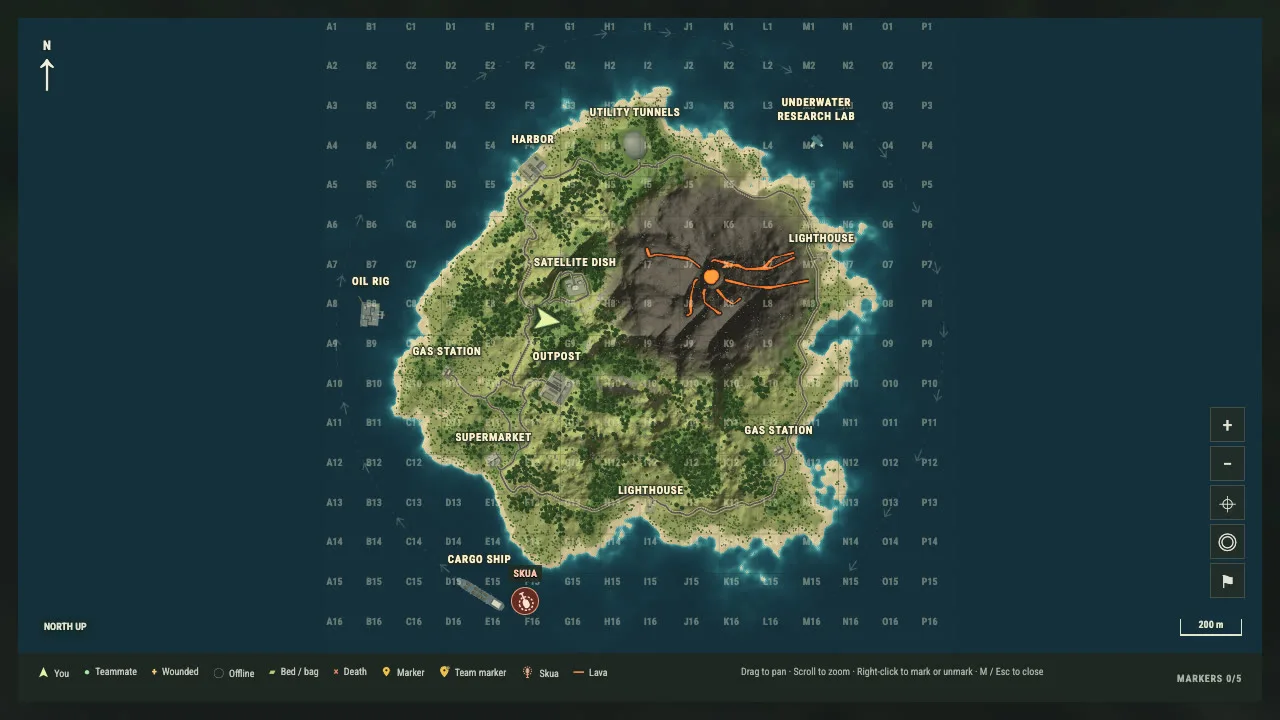
- It shows on the map wherever it flies, and where it comes down.
- Its rotors are louder and carry further, so you hear it coming.
The desert
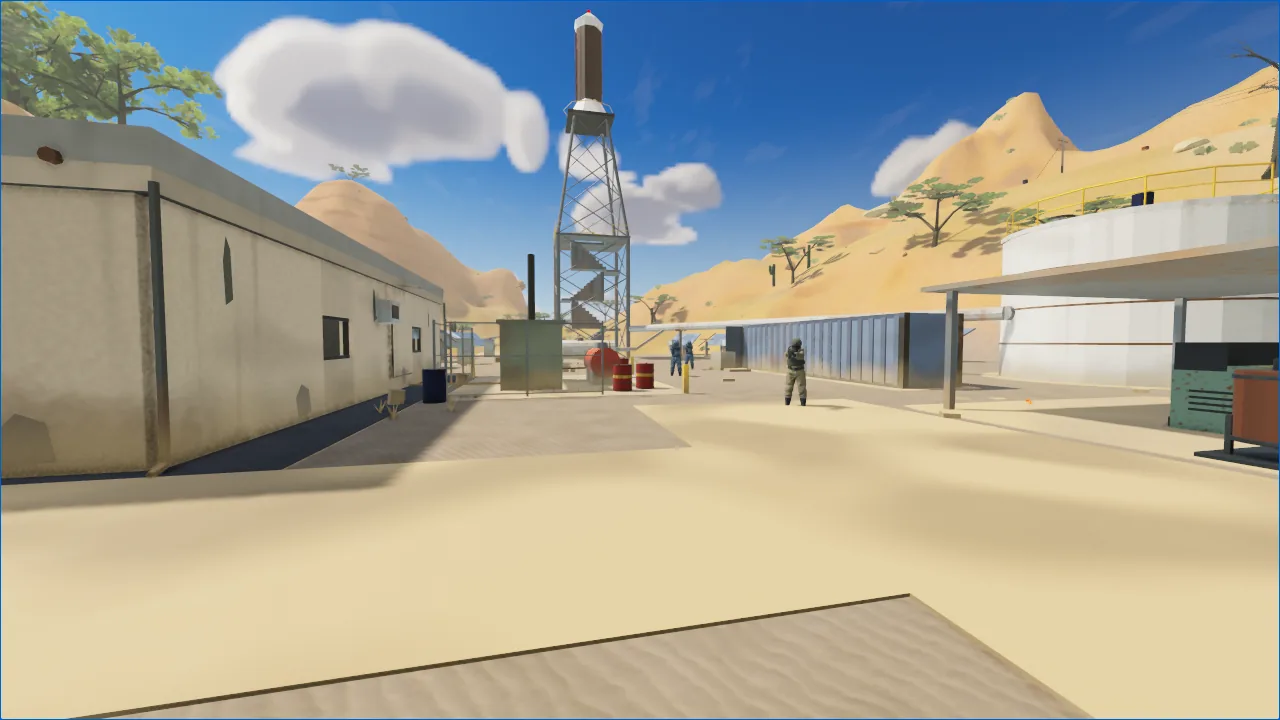
- Walking on desert sand has its own soft footsteps, without the old crunch and squeak. Beaches keep theirs.
- Quieter air: the insect drone is softer, dust gusts come much less often and from further off, and dust devils are quieter.
- Clearer air: the yellow haze and the bleached horizon are lighter, and the heat shimmer is gentler and no longer wobbles the ground near you. Sandstorms are unchanged.
Scientists fight fairer
After the last update, scientists shot you from far away when you were just walking past, opened fire the instant they saw you and shot very fast. They are still dangerous, but now they give you a chance.
- Guards look where they're facing. They see about 28 to 34 m ahead of them and much less to the sides and behind, so you can slip past one looking the other way. They always notice you within 6 m.
- Walking past a monument at a distance no longer gets you shot. Riflemen only fight within about 10 m of the ground they guard.
- Marksmen still watch from up to 60 m and hit hard, but they stay close to their post too.
- Guards take a moment to react before the first shot, and longer the farther away you are. If you duck out of sight and come back, they need a moment again.
- The first burst is a warning that goes wide. Guards miss more at range and when you're moving.
- Bursts are slower and each round does a little less damage. Shotgun breachers pump slower.
- No more firing squads: at most two guards shoot at you at once, and the rest wait at their own spots. A guard you shoot can always shoot back, and anyone within a few metres of you will fire.
- Guards keep their health, and the hard monuments are still hard. Stand in the open at Caldera Works and you won't last long.
No more clumping
- Guards start spread out along their patrol routes instead of standing on top of each other.
- At most three guards come to check a noise or a radio call, each from a different side.
- Flanking guards take positions of their own and don't circle round behind you.
- A squad holds its positions instead of all walking straight at you.
Fuller crates
- Every barrel now holds an item, brown crates hold more, and military crates always give a component plus a supplies roll of ammo or meds. Elite and armory crates are fuller too. Gun, explosive and armor odds are unchanged.
- Sunken salvage can hold diving tanks, flashlights, backpacks, pistol ammo and bandages.
- Loot crates are take-only, and a half-looted crate refills after its usual time once nobody is near it.
- Caldera Works has a hackable lockbox on the crater floor. Its raised crates, Skua Roost's, two in the Utility Tunnels and one each at the Underwater Lab and Permafrost Vault are now military crates, and the Lab's vault holds an armory case.
- Convoy cargo doubles on 2× servers.
Raiding and mining
- Melee, bullets and arrows against buildings follow Rust's tables. The jackhammer no longer breaks a wooden door in half a minute (about 7 minutes now), and metal, garage and armored doors, hatches and grills only take damage from blunt tools.
- Soft sides take ten times the hard side.
- Bullets do far less to buildings: an assault rifle needs about 160 rounds for a wooden door. Plain arrows only hurt twig, and fire arrows burn a fixed amount. Explosives are unchanged.
- Ore nodes give their full amount to every tool from the metal pickaxe up, and better tools just mine faster: 1,000 stones, 600 metal ore plus 2 high quality ore, or 300 sulfur.
More servers when they fill up
- When every server of a kind is about 90% full, another opens with the same rules and region, for example US West Main #2, and the server list recommends it.
- Extra servers never close in the middle of a wipe. At the wipe, only the ones that weren't needed close, with an in-game notice first.
Sound
- You now hear a guard's radio call every time one spots you, even if it was already checking out a noise.